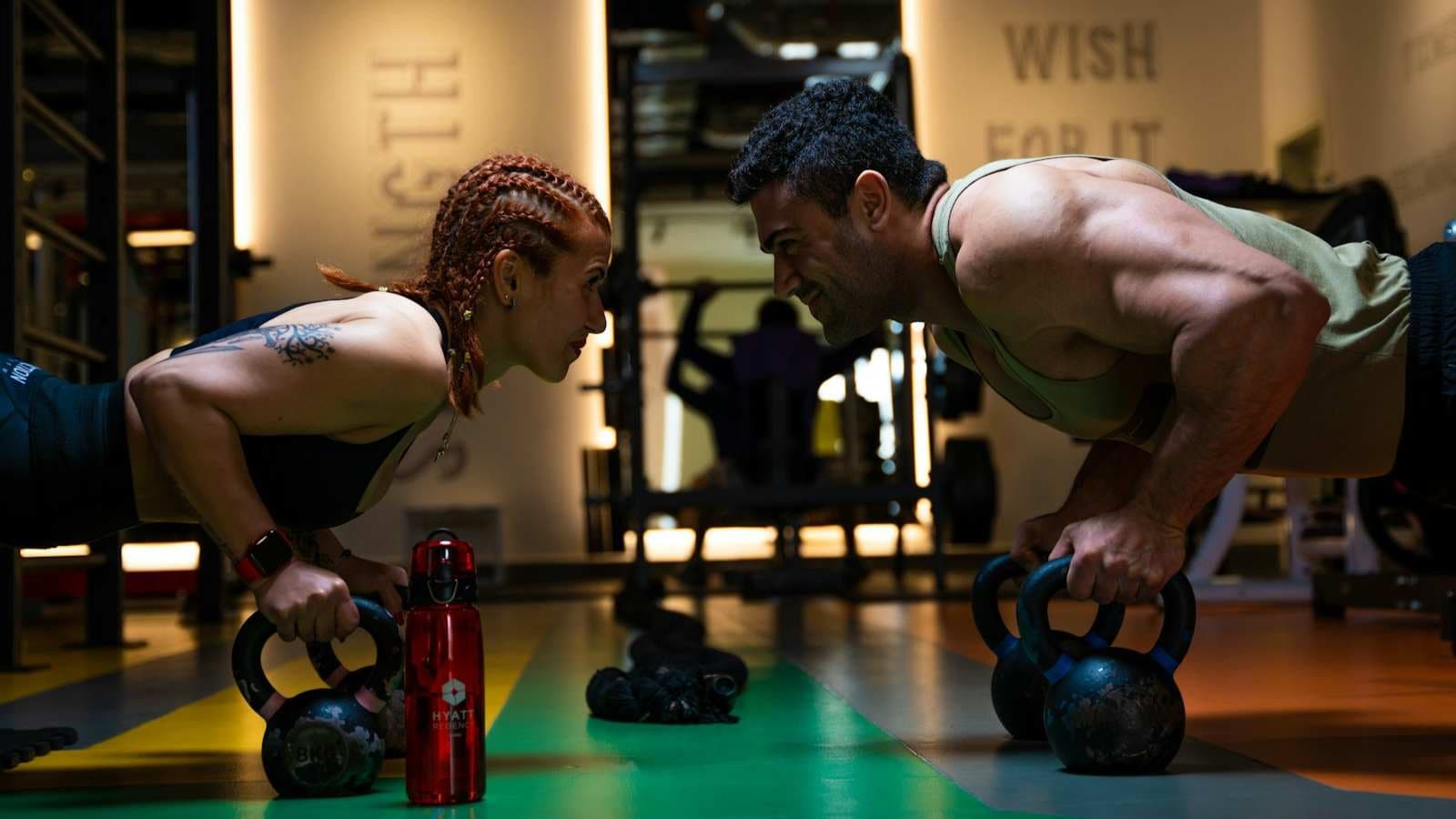

When starting a fitness journey, one of the first major decisions you face is choosing between calisthenics (bodyweight training) and traditional gym workouts (weightlifting and machines). Both disciplines have passionate followers, impressive results, and distinct physiological benefits.
Calisthenics relies on leveraging your own body weight using gravity, pull-up bars, and parallel bars. Gym workouts use external resistance—barbells, dumbbells, cable towers, and specialized isolation machines—to stress muscle tissue.
Which approach delivers superior overall fitness? The answer depends on your personal goals, budget, mobility needs, and muscle-building priorities. Here is an in-depth breakdown of how calisthenics and gym training compare.
1. Muscle Growth (Hypertrophy)
If your primary goal is maximizing raw muscle size and building a classic bodybuilding physique, the traditional gym environment holds a clear structural advantage.
-
Gym Workouts: Weightlifting utilizes progressive overload in straightforward, measurable increments. If a 50 kg bench press becomes easy, you simply add 2.5 kg plates to the bar. Isolation machines also allow you to target specific muscle groups (like biceps or hamstrings) without fatigue in secondary supporting muscles.
-
Calisthenics: Building muscle through bodyweight movements requires altering leverage, joint angles, or rep speeds (e.g., advancing from standard push-ups to decline, archer, or one-arm push-ups). While advanced calisthenics practitioners build impressively lean, athletic physiques, isolating specific muscles is significantly harder.
2. Functional Strength and Body Control
Functional strength refers to how effectively your strength translates into real-world movement, balance, coordination, and athletic performance.
-
Calisthenics: Calisthenics excels at developing exceptional relative strength (how strong you are compared to your body weight), core stability, and kinetic awareness. Complex skills like muscle-ups, handstands, and planches require high neuromuscular control, active mobility, and joint health.
-
Gym Workouts: Weightlifting builds absolute strength (the maximum amount of force you can exert against an external object). Squatting twice your body weight or deadlifting heavy loads builds strong bone density and powerful posterior chain muscles, though it doesn't automatically teach complex spatial body awareness.
3. Accessibility, Cost, and Convenience
Where and when you can train plays a massive role in long-term workout consistency.
-
Calisthenics: Highly accessible and virtually free. All you need is open space, a floor, and ideally a pull-up bar or park dip bars. You can maintain your training regimen while traveling, at home, or in local parks without paying gym membership fees.
-
Gym Workouts: Requires access to a commercial facility, home gym equipment, or specialized resistance gear. Gym memberships carry recurring monthly costs, and busy peak hours can lead to waiting times for popular squat racks and benches.
4. Risk of Injury and Joint Health
Both training styles carry injury risks if bad form or excessive volume is used, but the nature of the stress differs.
-
Calisthenics: Bodyweight exercises generally place less systemic load on your spine and joints. Movements tend to follow natural human motion paths. However, high-level skills (like gymnastics ring training) require strong tendons and connective tissue conditioning to prevent wrist and shoulder strains.
-
Gym Workouts: Heavy compound lifts (like heavy deadlifts or overhead presses) impose heavy axial loading on the spine. Ego lifting or improper technique under heavy iron carries a higher risk of acute joint, disc, or muscular injury.
Direct Comparison: Calisthenics vs. Gym Training
| Feature / Goal | Calisthenics (Bodyweight) | Gym Workouts (Weightlifting) |
| Primary Focus | Relative strength & body control | Absolute strength & muscle size |
| Progressive Overload | Change leverage, angles, skill difficulty | Add physical weight plates |
| Muscle Isolation | Low (uses compound movements) | High (uses cables, machines, dumbbells) |
| Equipment & Cost | Minimal to none (Free / Low Cost) | Gym membership / Home equipment required |
| Core & Mobility | High activation built-in | Requires dedicated core & mobility work |
| Learning Curve | High (requires skill balance & form) | Moderate (easier to learn isolated machine form) |
Can You Combine Both? (Hybrid Training)
You do not have to choose strictly one over the other. Hybrid training—combining the best elements of both disciplines—is wildly popular among modern athletes.
For instance, you can use heavy compound gym lifts (like barbell squats and deadlifts) for lower body strength, while utilizing calisthenics (weighted pull-ups, ring dips, and push-up variations) for upper body development and joint longevity.
Summary Thoughts
Neither discipline is universally "better"—they simply serve different primary objectives. If you want maximum muscle size, easy isolation, and heavy absolute strength, a gym membership is your best path. If you value freedom, mobility, core control, and skill mastery without monthly fees, calisthenics is unbeatable. Choose the style that aligns with your personal goals and keeps you consistently moving.
Frequently asked questions
Can you build a great physique with only calisthenics?+
Yes. Calisthenics can build a highly defined, muscular, and athletic upper body. However, building massive leg muscles (quads and hamstrings) exclusively with bodyweight exercises is difficult, making weighted squats or gym leg training beneficial.
Which burns more calories: calisthenics or gym weightlifting?+
Caloric burn depends primarily on workout intensity, duration, and heart rate rather than the equipment used. Fast-paced calisthenics circuits engaging multiple large muscle groups simultaneously often burn comparable or higher calories than traditional bodybuilding sets with long rest periods.
Is calisthenics better for beginners than gym workouts?+
Calisthenics is great for beginners because it teaches fundamental body control (pushing, pulling, planking). However, gym weight machines can actually be easier for complete beginners who lack the initial strength to perform standard push-ups or pull-ups, as machine weights can be set lower than body weight.