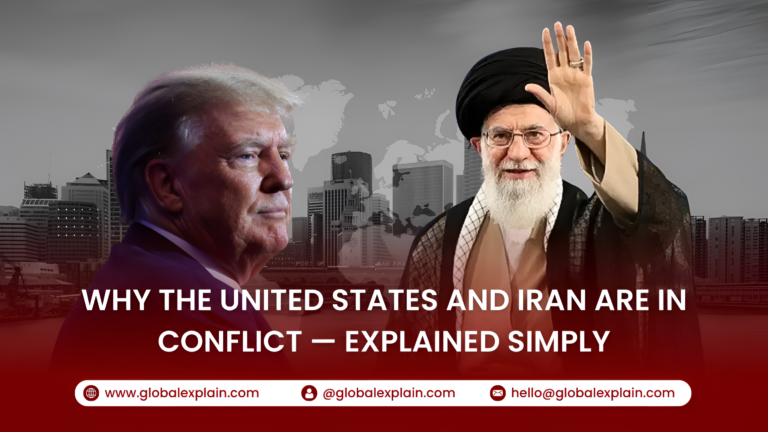
The conflict between the United States and Iran did not start suddenly. It is the result of many years of mistrust, political differences, and power struggles. To understand this issue clearly, we need to look at it step by step, without complicated words or political bias.
1. How the Relationship Started
Many years ago, the United States and Iran were not enemies. In fact, the U.S. supported Iran’s government and had strong influence in the country. At that time, Iran was ruled by a king (called the Shah) who was friendly with Western countries.
Over time, many people in Iran felt unhappy. They believed their country was being controlled from outside and that their culture and independence were being ignored. This frustration slowly turned into anger against foreign influence, especially the United States.
2. The Turning Point: Iran’s Revolution
Everything changed when Iran went through a major revolution. The old government was removed, and a new system based on religious leadership came into power. This new leadership wanted Iran to be fully independent and strongly opposed Western influence.
Because the United States had supported the old government, the new Iranian leaders no longer trusted the U.S. From that moment, relations became tense, and official ties between the two countries were cut.
3. Deep Mistrust on Both Sides
After the revolution, several events increased anger and fear on both sides. The United States saw Iran as unpredictable and dangerous. Iran saw the U.S. as a country that interferes in other nations’ internal matters.
This mutual distrust grew stronger over the years. Once trust is broken at a national level, it becomes very hard to rebuild.
4. Iran’s Nuclear Program
One of the biggest reasons for conflict is Iran’s nuclear program. Iran says it needs nuclear technology for energy and development. The United States fears that this technology could be used to make nuclear weapons.
Because of this fear, the U.S. placed strict economic sanctions on Iran. These sanctions affected Iran’s economy, oil exports, and international trade. Iran believes these actions are unfair and meant to weaken the country.
5. Power Struggle in the Middle East
The United States and Iran also support different sides in Middle Eastern conflicts. Both countries want influence in the region, but their goals are very different.
The U.S. supports some countries and groups that Iran opposes, and Iran supports groups that the U.S. considers a threat. This has created indirect conflicts where both sides clash without fighting each other directly.
6. Sanctions, Pressure, and Threats
Over the years, the U.S. has used sanctions, warnings, and diplomatic pressure to control Iran’s actions. Iran has responded by resisting pressure and showing strength through military development and strong statements.
This cycle of pressure and resistance keeps the conflict alive, even when both sides say they do not want war.
7. Why This Conflict Has Not Ended
The conflict continues because:
- Both sides deeply distrust each other
- Their political systems and values are very different
- There are security fears and power struggles
- Past events still affect present decisions
Neither country wants to appear weak, and both want to protect their interests.
8. How This Affects the World
This conflict does not affect only the U.S. and Iran. It impacts:
- Global oil prices
- International trade
- Middle East stability
- Countries that depend on energy imports
That is why people around the world follow this issue closely.
Conclusion
The conflict between the United States and Iran is not about one single problem. It is a long story shaped by history, fear, power, and broken trust. Until both sides find a way to reduce mistrust and communicate clearly, tensions are likely to continue.
Understanding this conflict simply helps us see that global issues are rarely black and white — they are built over time.
About the Author